If you’ve spent any real time with Ayurveda, the Kapha basics probably aren’t new to you: eat light, eat warm, make lunch your biggest meal, skip the ice water. That part of the picture is well covered.
What’s less often explained is why any of it works, what’s actually happening underneath the food list, and how the picture shifts specifically for women, across cycles, postpartum, and the hormonal terrain of perimenopause. That’s where this guide goes.
In this piece, you’ll find:
what Kapha actually is, elementally, and why “heavy and cool”gets balanced by “light and warm”
the five subtypes of Kapha and what each one governs in the body
why Kapha isn’t something to fight; only excess Kapha is
how Kapha shifts specifically for women, across life stages
the full food list, meal rhythm, and a sample day, ready to use
What Kapha Actually Is
Kapha is built from two elements: Prithvi (earth) and Jala (water). Together, they create everything heavy, cool, stable, and moist about the body: the physical structure that holds you together, the lubrication in your joints, the steadiness underneath your mood.
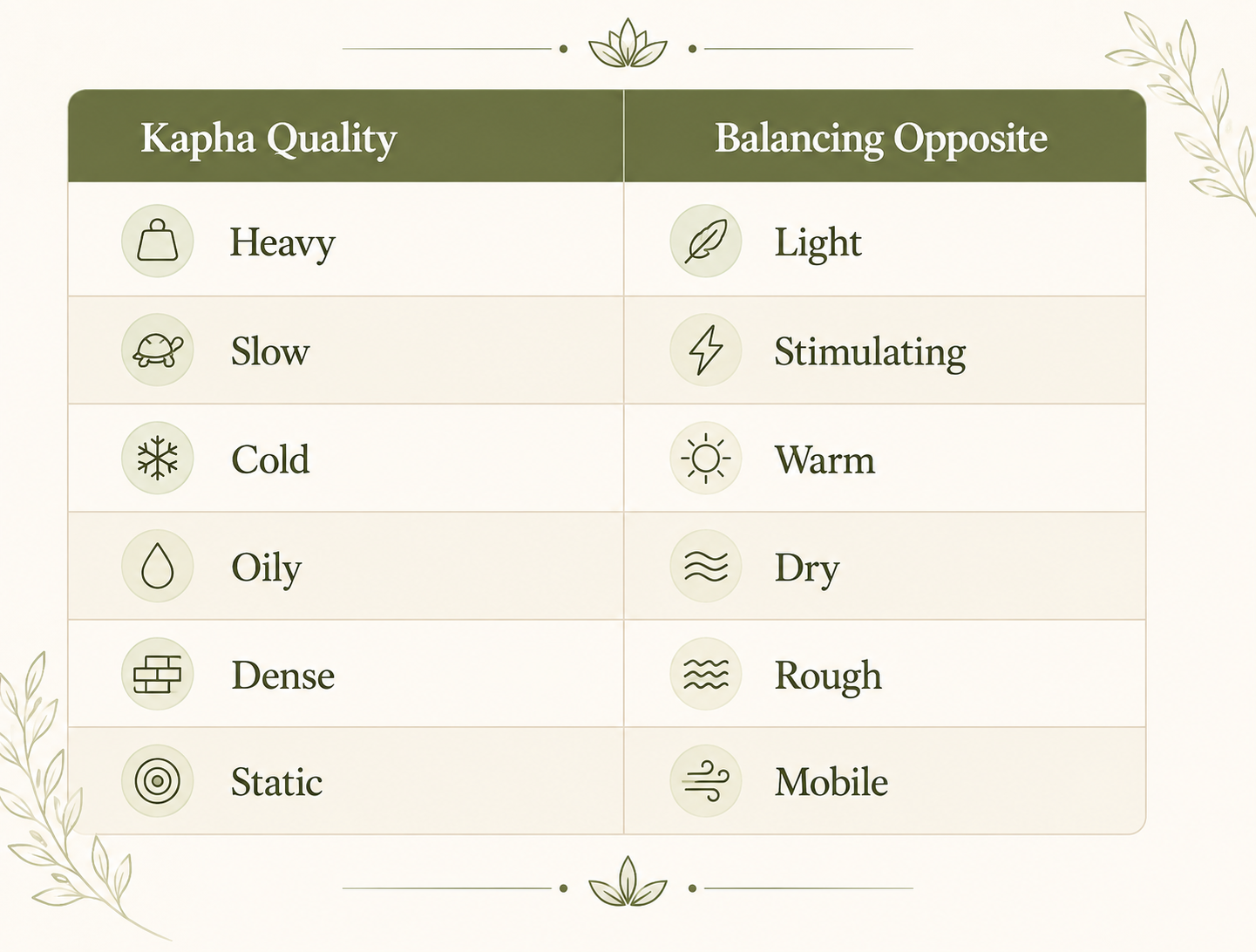
Ayurveda describes Kapha through a set of qualities, or gunas: heavy, slow, cold, oily, smooth, dense, soft, stable, cloudy, and sticky. The entire logic of a Kapha-balancing diet comes from one simple principle, samanya-vishesha: like increases like, and opposite qualities balance each other out. Heavy food adds to heaviness. Light food counters it. Cold food adds to cold. Warmth counters it. Once you see the food list through this lens, it stops being a list of rules and starts being a straightforward application of one idea.
The Five Faces of Kapha
Kapha isn’t one uniform force. Ayurveda describes five subtypes, each governing a different part of the body:
Avalambaka Kapha — seated in the chest and heart, it’s described as the physical reserve that supports the other four subtypes and is closely tied to Ojas, the body’s deeper vitality.
Kledaka Kapha — in the stomach, it moistens food to prepare it for digestion.
Bodhaka Kapha — on the tongue, it governs taste perception and salivation.
Tarpaka Kapha — around the brain and sense organs, it’s said to nourish the mind and support contentment.
Shleshaka Kapha — in the joints, it provides lubrication and cushioning.
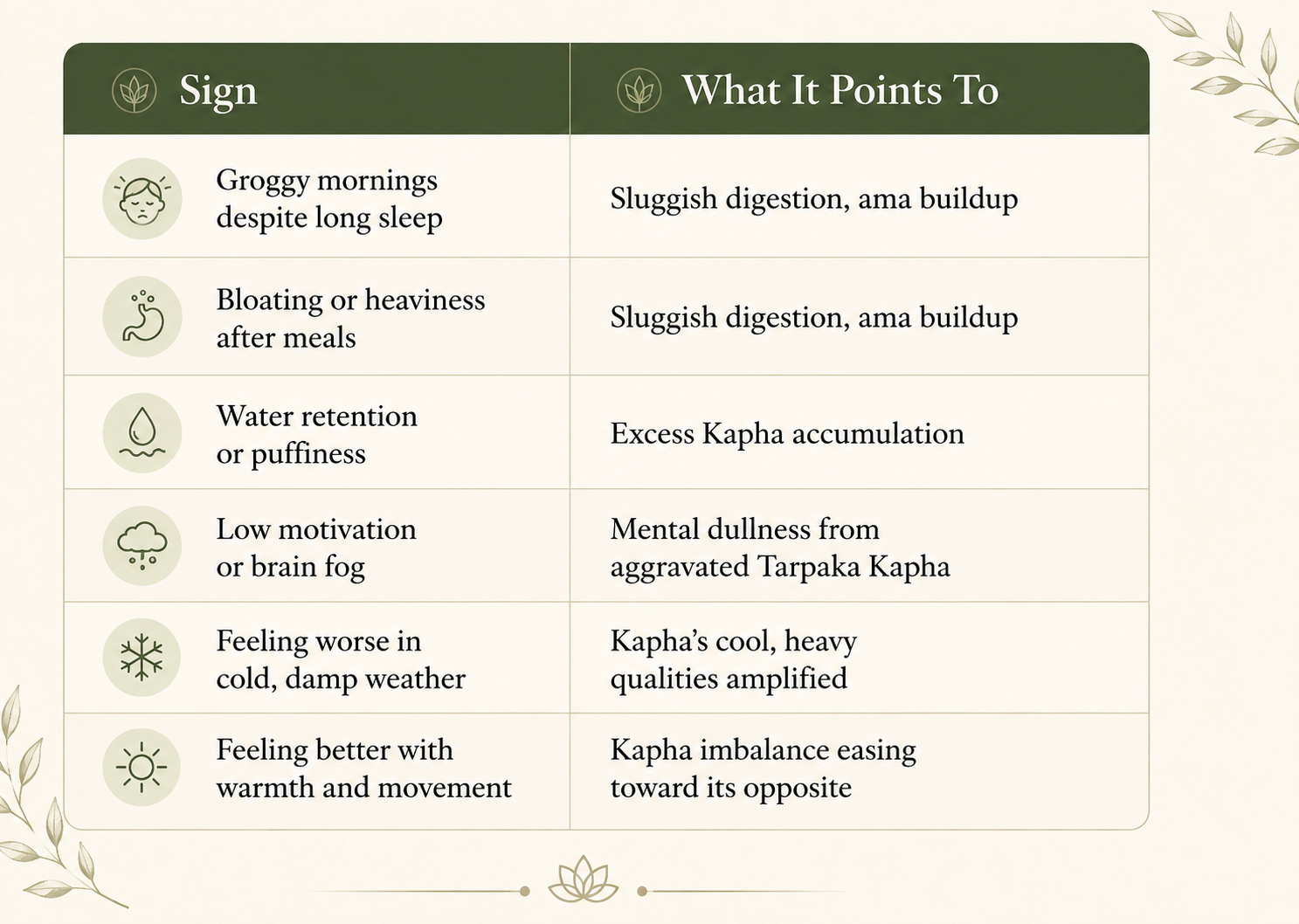
Nearly every symptom on a typical “Kapha imbalance” list traces back to one of these five: brain fog to Tarpaka, sluggish digestion to Kledaka, joint stiffness to Shleshaka. Knowing which subtype is most affected can make the guidance below feel less generic.
Kapha Isn't the Enemy
It’s easy to read a list of “Kapha symptoms” and start treating the dosha itself like a problem. Ayurveda doesn’t see it that way.
Balanced Kapha is strength, immunity, patience, and steadiness. It’s the dosha most associated with compassion and emotional resilience, and it forms the physical basis of Ojas itself. The goal was never to eliminate Kapha. It was to keep it from tipping into excess, where those same qualities curdle into heaviness, stagnation, and a kind of inertia that’s hard to shake.
Everything in this guide is about that balance, not a fight against your own constitution.
How Kapha Shifts for Women Specifically
Kapha’s earth-and-water nature shows up differently across a woman’s life, in ways a generic food list rarely addresses.
Kapha governs Artava Dhatu, the reproductive tissue, which is part of why fluid retention, breast tenderness, and heaviness often cluster around the same points in a cycle. Postpartum, the body is classically understood to run low on Vata, but it can simultaneously accumulate Kapha through fluid retention, which is part of the reasoning behind warm, light, easily digested food in the weeks after birth (the same principle behind several of the postpartum herbs and spices covered in an earlier piece on women’s health spices). And as estrogen shifts through perimenopause, many Ayurvedic practitioners describe an increase in Kapha-type patterns: slower metabolism, water retention, and a heavier, foggier baseline than before.
Some of these patterns also show up in conditions like PCOS or thyroid changes, which have real hormonal and medical dimensions well beyond diet. This guide offers a traditional lens, not a diagnosis; if something feels persistently off, it’s worth bringing to a doctor alongside anything you try here.
Signs a Kapha Pattern May Be at Play
Eating in the Opposite Direction
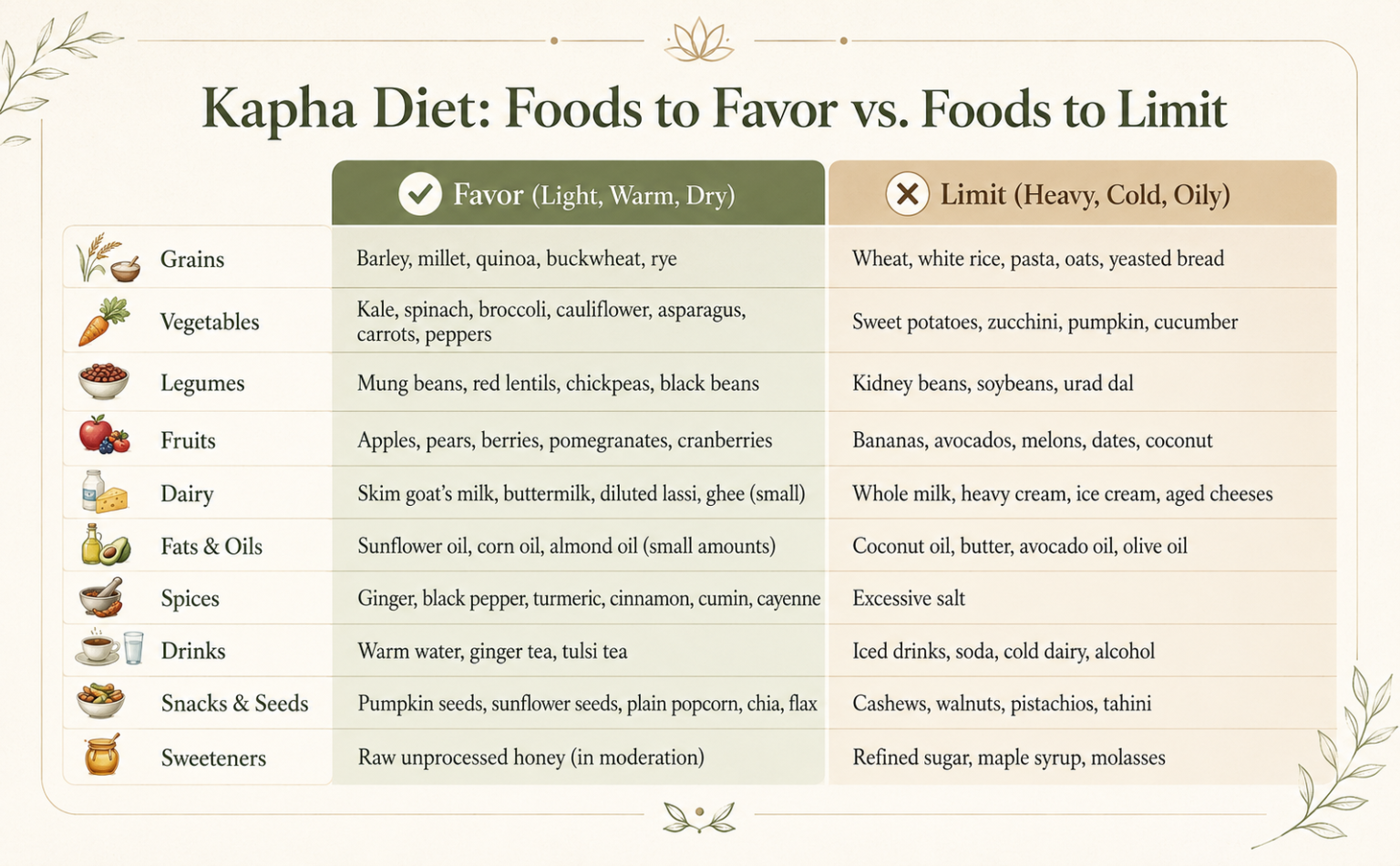
Once the pattern is familiar, food becomes the most direct lever. For Kapha, that means leaning into pungent, bitter, and astringent tastes, warming spices, leafy greens, cooked legumes, while pulling back on sweet, sour, and salty foods, which tend to add to heaviness and water retention.
Warming spices do a lot of the work here: ginger, black pepper, turmeric, cumin, and mustard seedall support metabolic function, and turmeric in particular supports digestion directly. Cooking method matters as much as ingredient choice. Steaming and sautéing suit Kapha far better than raw or fried food, a bowl of sautéed greens with cumin and lemon, or a brothy soup with ginger and black pepper, digests more easily than a raw salad ever will.
Meal Timing, Portions, and Drinks
Ayurveda holds that agni, the digestive fire, peaks at midday and runs weaker in the early morning and evening. That’s the entire logic behind making lunch the main event: three regular meals, with lunch as the largest, something like mung bean khichdi or steamed greens with cumin and lemon.
Breakfast should stay light, and only happen when hunger is real, a cooked pear with ginger, or a small bowl of warm millet porridge, is plenty. Dinner follows the same logic: light, and finished at least three hours before bed to avoid ama building up overnight. Snacking is generally discouraged; if something’s needed between meals, kale chips or plain popcorn fit better than anything heavier.
Warm drinks support the whole rhythm. Iced beverages slow digestion, so ginger tea, tulsi tea, or warm water with lemon are the better companions through the day.
The Full Kapha Food List
A Sample Kapha Day
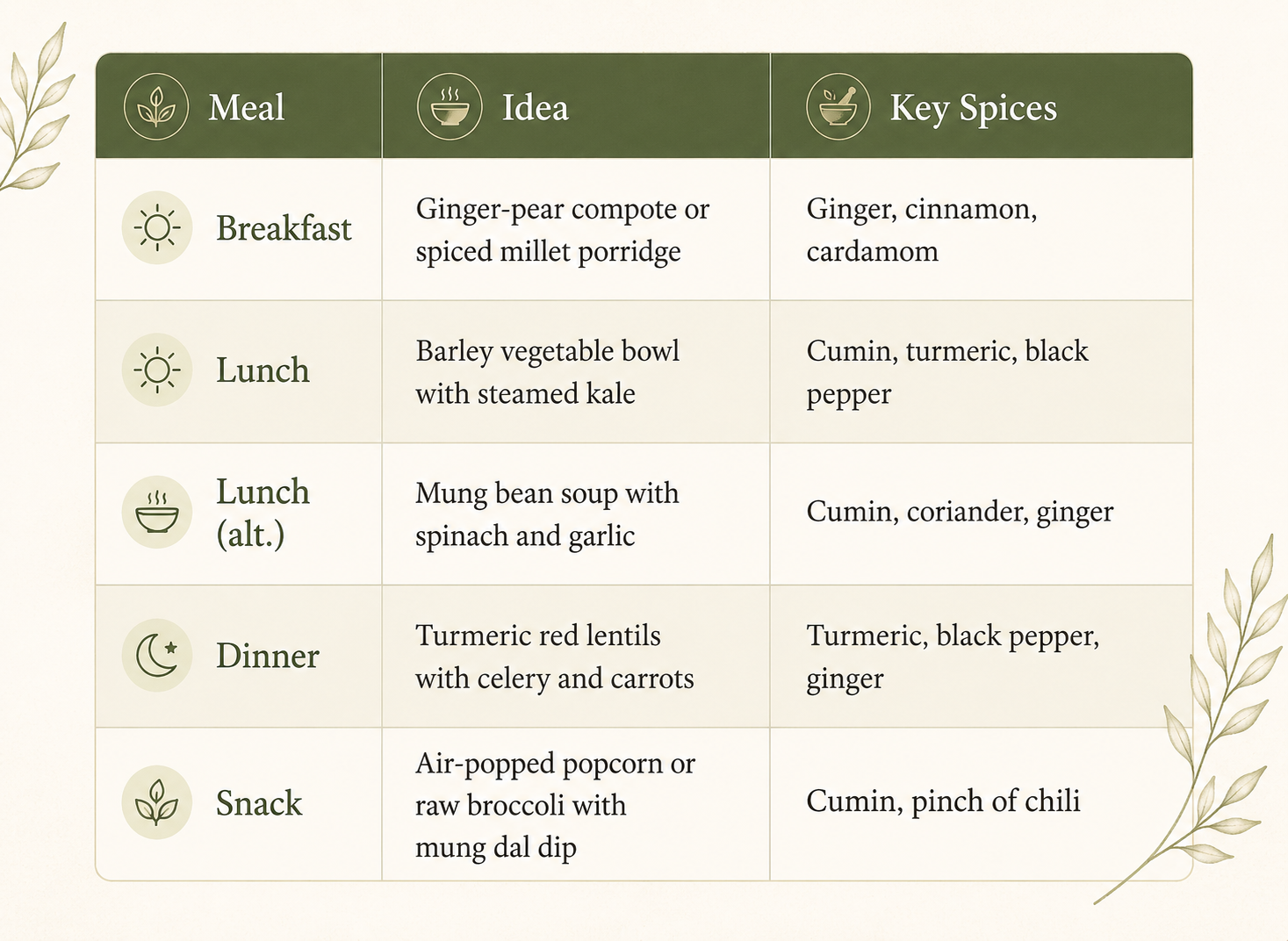
Structure tends to matter as much as the food itself: a small-large-small rhythm, light breakfast, main lunch, light dinner, works with agni’s natural daily curve rather than against it.
Start with a cup or two of warm water before anything else. Eat breakfast only if hunger is real. Make lunch the largest meal, ideally near midday: legumes, a light grain, steamed vegetables. Keep dinner small, and finish at least three hours before bed.
Lifestyle Habits That Round It Out
Food does more work when the rest of the day supports it: 20 to 45 minutes of daily movement, no daytime naps, regular meal times, and a bedtime around 10pm all help keep Kapha from settling into stagnation.
A gentle reminder: shifts in weight, energy, or mood, especially around your cycle, postpartum, or perimenopause, can have many causes, including hormonal or medical conditions that deserve their own evaluation. Treat this guide as a traditional lens to work alongside your care, not a replacement for it.
Balance, Not a Fight
The Kapha basics were never wrong, eat light, eat warm, make lunch count. What they leave out is the reason any of it works: qualities meeting their opposites, subtypes doing quiet, specific jobs, a dosha that is strength and steadiness at its best, and only becomes a problem when it’s given nothing to balance against.
You don’t need to change everything today. One shift, warmer meals, an earlier dinner, a midday lunch that’s actually your biggest, is enough to start. The rest can follow once the first one feels natural.
Get to Know Your Constitution, Not Just Your Symptoms
This guide covers Kapha specifically, but most people are a blend of more than one dosha. Master Your Doshawalks you through understanding your full constitution and the food, herbs, and daily practices that keep it in balance through every season of life.