What to Do After an Abhyanga Massage: An Ayurvedic Guide to Maximizing the Benefits
An Abhyanga massage doesn’t end when you wipe away the oil.
In Ayurveda, what you do during the next few hours is considered just as important as the massage itself. Proper aftercare allows the body to fully absorb the nourishing effects of the herbal oils, supports healthy circulation, calms the nervous system, and helps extend the deep sense of balance created during the treatment.
Many people unknowingly rush back into their normal routine—taking a hot shower immediately, eating a heavy meal, exercising, or jumping back into work. While these habits may seem harmless, they can diminish many of the benefits that Abhyanga is designed to provide.
Fortunately, post-Abhyanga care is wonderfully simple.
Rest. Stay warm. Bathe gently. Eat lightly. Move through the remainder of the day with a little more softness and awareness.
These small choices help your body integrate the treatment and continue the healing process long after the massage has ended.
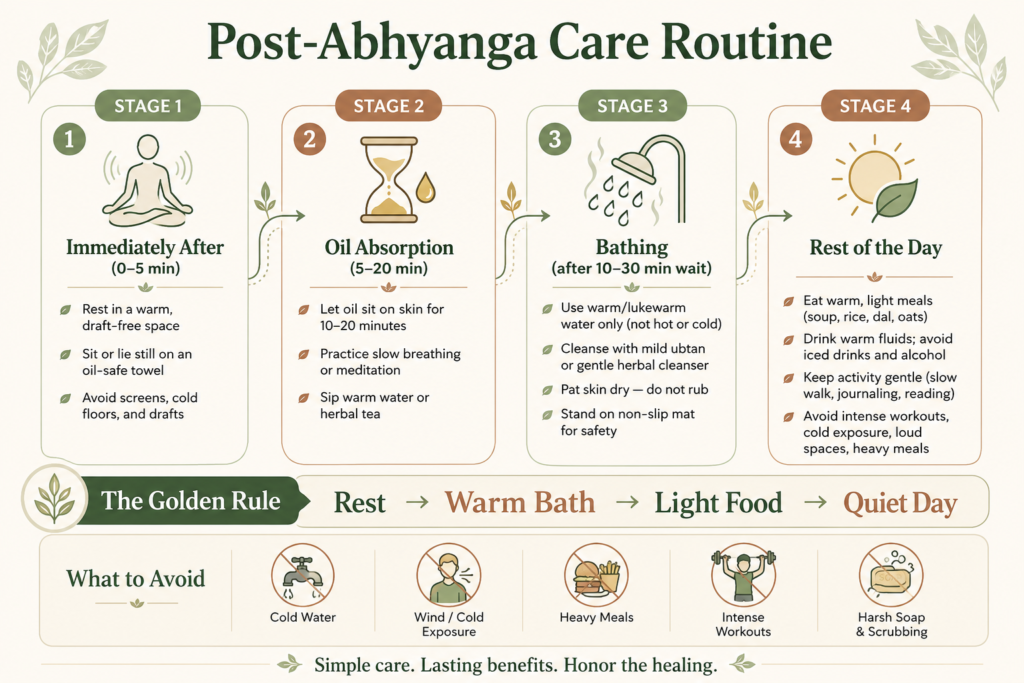
Here’s the simple routine to remember:
Rest quietly for 5–20 minutes after your massage.
Rest quietly for 5–20 minutes after your massage.
Allow the oil to absorb for 10–30 minutes before bathing.
Shower using warm—not hot or cold—water.
Eat warm, nourishing, easy-to-digest meals.
Spend the rest of the day avoiding excessive stimulation, heavy exercise, and cold exposure.
By following these simple steps, you give your body the opportunity to fully receive one of Ayurveda’s most treasured daily practices.
The First 20 Minutes Matter Most
The period immediately following Abhyanga is when the body begins integrating the effects of the massage. Rather than rushing to wash the oil away, Ayurveda recommends slowing down and allowing both body and mind to settle.
Rest Somewhere Warm and Quiet
After finishing your massage, sit or lie comfortably in a warm, draft-free space for at least 5–20 minutes.
This quiet pause allows circulation to stabilize while the herbal oils begin nourishing the skin and underlying tissues.
Avoid cold floors, fans, open windows, or air conditioning. If you begin feeling cool, simply wrap yourself in a robe or towel. Since some oil may transfer, it’s helpful to sit on an old towel reserved for your Abhyanga practice.
Instead of reaching for your phone or starting your next task, simply breathe.
Many people find this becomes one of the most restorative moments of the entire ritual.
Give the Oil Time to Work
Before bathing, allow the oil to remain on your skin for at least 10–15 minutes. If your schedule allows, 20–30 minutes is even better.
This isn’t simply about moisturizing the skin.
Ayurveda teaches that warm herbal oils continue supporting the tissues after application, helping nourish the body while calming the nervous system.
During this waiting period, you might:
Practice gentle breathing
Meditate quietly
Sip warm water or herbal tea
Sit peacefully without distractions
The goal isn’t to “do” anything—it’s to allow the treatment to continue working naturally.
How to Bathe Without Washing Away the Benefits
Bathing after Abhyanga isn’t about removing every trace of oil.
Instead, the goal is to rinse away the excess while allowing a light, nourishing layer to remain on the skin.
Choose Warm Water
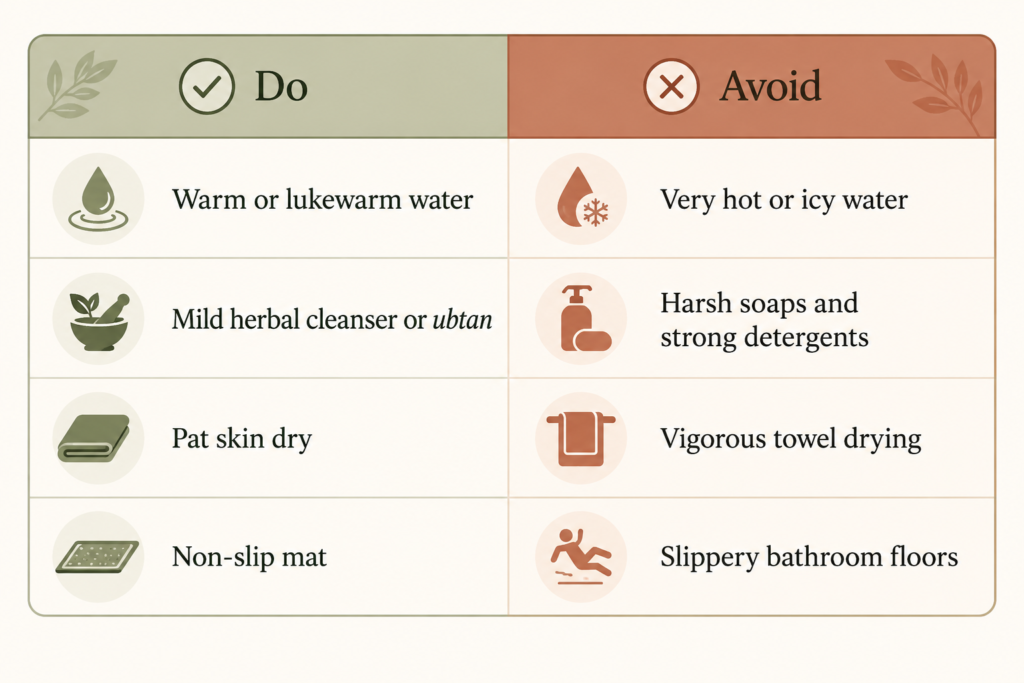
Warm or lukewarm water is ideal.
Very hot water can strip away too much oil and overstimulate the body, while cold water can shock the system and interrupt the gentle warmth created by the massage.
If you feel particularly warm after the treatment, begin by rinsing your feet before gradually wetting the rest of the body.
Cleanse Gently
Rather than using harsh soaps, choose a mild herbal cleanser or traditional ubtan.
After bathing:
Pat the skin dry instead of rubbing vigorously. Stand on a non-slip mat or towel since oil can make floors slippery. Use a towel that can be washed separately if needed.
The bath should feel like a continuation of the massage—not something that erases it.
Continue Supporting Your Body Throughout the Day
The benefits of Abhyanga continue long after you leave the bathroom.
Ayurveda recommends treating the remainder of the day as an opportunity to preserve the calm, grounded state you’ve created.
Eat Warm, Nourishing Foods
After Abhyanga, digestion tends to appreciate foods that are simple and easy to process.
Good choices include:
Warm soups
Dal
Rice
Oats
Steamed vegetables
Drink warm water or herbal tea throughout the day.
Try to avoid:
Iced drinks
Alcohol
Heavy meals
Excessively spicy or fried foods
Supporting digestion helps your body integrate the treatment more effectively.
Choose Gentle Activities
Rather than filling the day with errands or strenuous exercise, embrace slower activities such as:
Walking
Reading
Journaling
Meditation
Gentle stretching
Spending time in nature
This quieter pace allows both the nervous system and muscles to continue relaxing.
Avoid Overstimulation
One of the biggest mistakes after Abhyanga is returning immediately to a fast-paced schedule.
Whenever possible, postpone:
Intense workouts
Heavy lifting
Long hours of driving
Cold exposure
Loud environments
Excessive screen time
Giving yourself even a few extra hours of calm can significantly enhance the overall experience.
Common Mistakes That Reduce the Benefits
Abhyanga is remarkably forgiving, but a few habits can shorten its effects.
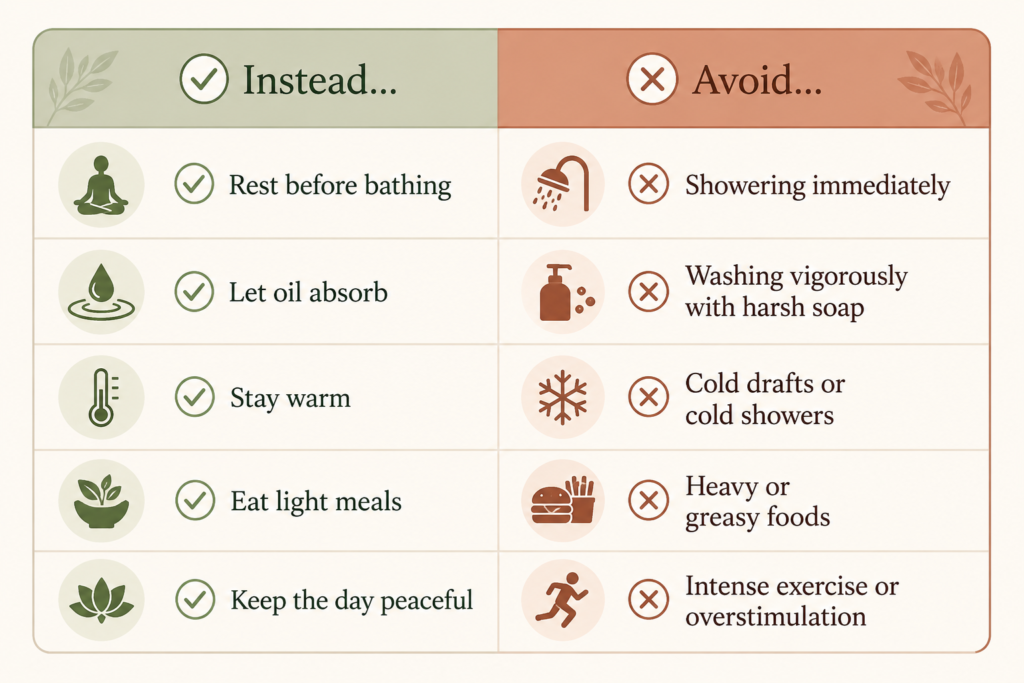
Avoid these common mistakes:
Think of Abhyanga as planting a seed.
The massage begins the process, but your aftercare allows it to fully take root.
A Simple Routine You'll Remember
One of the beautiful aspects of Ayurveda is that profound healing often comes from simple, consistent habits.
You don’t need an elaborate routine after Abhyanga.
Simply remember:
Rest → Warm Bath → Light Meals → Quiet Day
Following this gentle rhythm allows your body to absorb the full nourishment of the oils, supports healthy digestion and circulation, and extends the deep sense of calm that makes Abhyanga one of Ayurveda’s most cherished daily practices.
Over time, these small acts of care become part of a larger way of living—one that honors your body’s natural intelligence and supports lasting balance from the inside out.
Abhyanga is only one piece of Ayurveda’s daily routine. In The Dosha Protocol, you’ll discover 21 mornings of simple, dosha-specific practices that take just five minutes a day to help you create healthier habits, restore balance naturally, and begin each day feeling more energized, grounded, and connected to your body’s unique needs.