Ayurvedic vs Western Approach to Stress Management

Stress has become one of the defining conditions of modern life.

For many people, it feels almost unavoidable, a constant background hum of deadlines, responsibilities, and digital noise. Yet long before the word “stress” entered modern vocabulary, traditions like Ayurveda were already studying how the body and mind respond to pressure.

Today, two major systems offer ways to understand and navigate this experience: Western medicine and Ayurveda.

Western medicine tends to see stress as a physiological response — a disruption to the body’s internal balance. Treatments often focus on managing symptoms through therapy, medication, and behavioral strategies.

Ayurveda approaches the same experience differently. Rather than isolating stress as a mental condition, it views it as a disturbance in the deeper harmony between body, mind, and energy.

Both perspectives offer valuable insights. And when understood together, they reveal a broader path toward resilience.

The Ayurvedic View of Stress

In Ayurveda, stress is not simply an emotional state. It is a signal that the body’s internal intelligence has been disturbed.

This understanding begins with the three doshas — the governing forces of the body:

  • Vata, which regulates movement and the nervous system
  • Pitta, which governs metabolism and transformation
  • Kapha, which provides stability and structure


When stress pushes these forces out of balance, symptoms begin to appear.

Excess Vata often manifests as anxiety, racing thoughts, or insomnia.

Excess Pitta can lead to irritability, frustration, or inflammation.

Excess Kapha may appear as fatigue, heaviness, or emotional withdrawal.

Ayurveda also emphasizes the role of Agni, the digestive fire that governs how we process food, emotions, and experiences. When stress weakens Agni, metabolic waste known as Ama accumulates, clouding both body and mind.

Another powerful concept is Prajnaparadha, often translated as “the mistake of the intellect.” It refers to those moments when we ignore our inner wisdom — pushing through exhaustion, skipping rest, or choosing habits that quietly drain our vitality.

Over time, chronic stress can diminish Ojas, the subtle essence that sustains immunity, vitality, and emotional stability.

From an Ayurvedic perspective, true health, known as Swastha, arises when digestion is strong, the doshas are balanced, and the mind rests in a state of calm contentment.


The Western Understanding of Stress

Western medicine approaches stress through the lens of physiology and neuroscience.

When the body perceives a threat, it activates the fight-or-flight response. Hormones like adrenaline and cortisol surge through the bloodstream, preparing the body to respond quickly.

This response once helped humans survive immediate dangers. But modern stressors rarely come in short bursts. Instead, they linger — work pressure, financial concerns, endless notifications.

When this response stays activated for too long, it begins to wear down the system. Elevated cortisol can disrupt sleep, weaken immunity, and contribute to chronic conditions.

Researchers describe this cumulative strain as allostatic load — the biological cost of living under constant stress.

Interestingly, modern science is increasingly confirming something Ayurveda has long understood: the health of the gut and nervous system are deeply intertwined. The digestive system produces much of the body’s serotonin, and the microbiome plays a crucial role in emotional balance.

In this way, ancient wisdom and modern research begin to meet. lifestyle adjustments, while Western medicine excels in immediate symptom relief.


Aspect

Ayurvedic Approach 

Western Approach

Focus

Balancing mind-body harmony

Managing physiological and psychological responses

Methods

Diet, herbs, yoga, breathwork, daily routines

Therapy, medication, exercise, relaxation techniques

Personalization

Tailored to individual constitution (Prakriti)

Standardized protocols based on diagnosis

Strengths

Long-term balance and natural remedies

Immediate relief and scientific validation

Limitations

Requires time; limited clinical studies

Potential side effects; may overlook lifestyle factors

A brief visual comparison showing the core differences between the Ayurvedic and Western views of stress.

How Ayurveda Supports Stress Recovery

Ayurveda approaches stress not by fighting it, but by restoring rhythm.

One of its foundational practices is Dinacharya, the daily routine. Consistent times for waking, eating, and sleeping help stabilize the nervous system and bring the body back into alignment with natural cycles.

Warm, freshly prepared meals support digestion and prevent the accumulation of Ama. Even simple acts like eating slowly and mindfully can calm the mind.

Another cherished ritual is Abhyanga, the practice of massaging warm oil into the body. This daily self-care practice nourishes the skin, grounds the nervous system, and brings a sense of steadiness.

Herbs also play a role. Adaptogenic plants such as Ashwagandha, Brahmi, and Tulsi are traditionally used to support resilience and calm the mind.

Complementing these are practices like yoga, breathwork, and meditation, which encourage the body to shift from tension into restoration.

Rather than forcing the system to relax, Ayurveda gently reminds the body how to return to balance.

Western Tools for Managing Stress

Western medicine offers tools that are particularly valuable when stress becomes overwhelming.

One of the most widely used approaches is Cognitive Behavioral Therapy (CBT), which helps individuals identify patterns of thinking that contribute to anxiety.

Mindfulness-based programs have also gained popularity, encouraging people to observe thoughts and emotions without judgment.

Lifestyle adjustments — regular exercise, improved sleep habits, and reduced stimulants — can also have a powerful impact on stress levels.

In some cases, medications may be prescribed to stabilize severe anxiety or depression while deeper healing takes place.

These tools often provide immediate support, helping people regain stability during difficult periods.

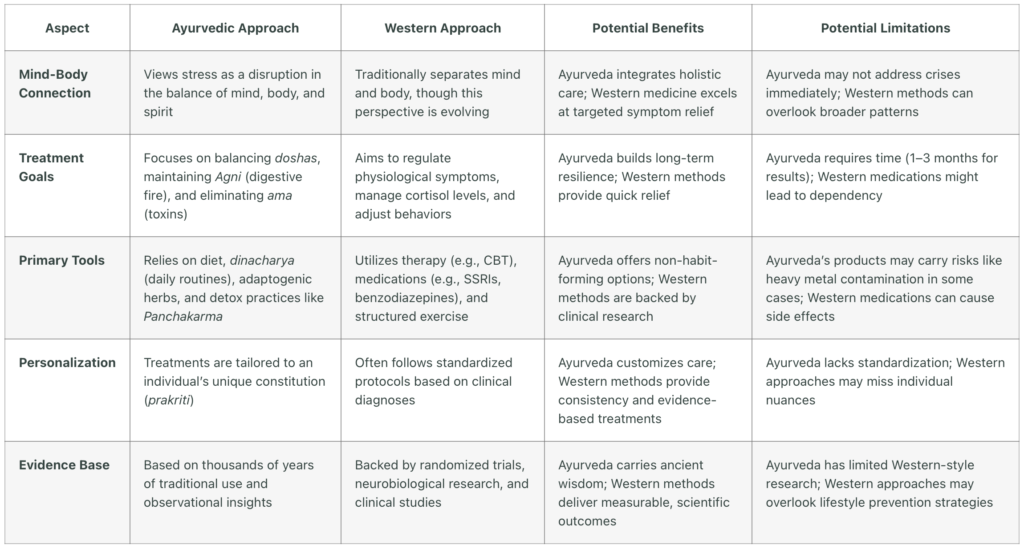
A deeper comparison outlining the strengths of each system and how they can complement one another.

Two Traditions, One Goal

Despite their differences, Ayurveda and Western medicine share a common aim: helping human beings return to balance.

Western medicine excels at diagnosing acute conditions and providing targeted relief.

Ayurveda offers a broader framework for cultivating long-term resilience, emphasizing rhythm, nourishment, and alignment with nature.

Together, they remind us that stress is not simply something to eliminate. It is something to understand, respond to, and ultimately outgrow through wiser living.

A Final Reflection

In Ayurveda, resilience is not built through force.

It grows quietly through the rhythms we keep, the nourishment we choose, and the moments of stillness we allow ourselves each day.

When we listen to the body’s signals and honor its need for balance, stress begins to lose its grip.

Where Wisdom Continues

The Optimal Living Ayurveda Summit brings together some of today’s most respected Ayurvedic voices to explore the deeper principles of balanced living.

Through more than 30 in-depth sessions, you’ll journey into topics such as resilience, digestion, clarity of mind, and the quiet cultivation of lasting vitality.