Why Summer Can Throw You Out of Balance (and How Ayurveda Brings You Back)
Summer invites us into longer days, brighter skies, and more time outdoors. Yet every season carries its own unique qualities, and our bodies naturally respond to them. Sometimes those changes bring greater vitality. Other times, they appear as subtle shifts in digestion, sleep, energy, skin, or mood.
Ayurveda teaches that these seasonal changes aren’t signs that something is wrong. They’re gentle reminders that we are deeply connected to nature’s rhythms. As the warmth of summer begins to accumulate within us, our internal fire naturally rises as well. When that heat becomes excessive, balance can slowly give way to irritability, inflammation, restlessness, or digestive discomfort.
The beautiful part is that restoring harmony rarely requires dramatic changes. Small, thoughtful adjustments—what we eat, when we move, how we rest, and the way we care for ourselves each day—can help the body return to its natural state of balance.
In this guide, you’ll discover:
Why summer naturally increases the Pitta dosha
Early signs that your body may be holding too much heat
Cooling foods and drinks that support digestion
A simple Ayurvedic daily routine for hot weather
Gentle breathwork, herbs, and self-care practices to restore balance naturally
Understanding Pitta During Summer
According to Ayurveda, every season influences the three doshas—Vata, Pitta, and Kapha.
Summer is governed by the qualities of heat, intensity, sharpness, and lightness, all of which naturally increase Pitta, the dosha composed primarily of Fire and Water.
Pitta gives us many of our greatest strengths. It supports healthy digestion, sharp thinking, courage, motivation, and transformation. But like fire itself, too much of it can begin to consume rather than nourish.
When Pitta becomes excessive, you may notice:
Heartburn or acid reflux
Loose stools
Acne, rashes, or skin redness
Burning eyes
Headaches
Irritability or impatience
Waking during the night, especially between 10 PM and 2 AM
Rather than seeing these as isolated symptoms, Ayurveda views them as gentle signals that the body is asking for more cooling, steadiness, and rest.
Fortunately, restoring balance often begins with the simplest daily choices.
Nourish the Body with Cooling Foods
One of Ayurveda’s most beautiful teachings is that every meal offers an opportunity to work with nature rather than against it.
During summer, favor foods with sweet, bitter, and astringent tastes, which naturally cool excess heat while supporting digestion and vitality.
Instead of heavy grilling or fried meals, choose lighter cooking methods such as steaming, boiling, or gentle sautéing.
Build Your Meals Around Cooling Foods
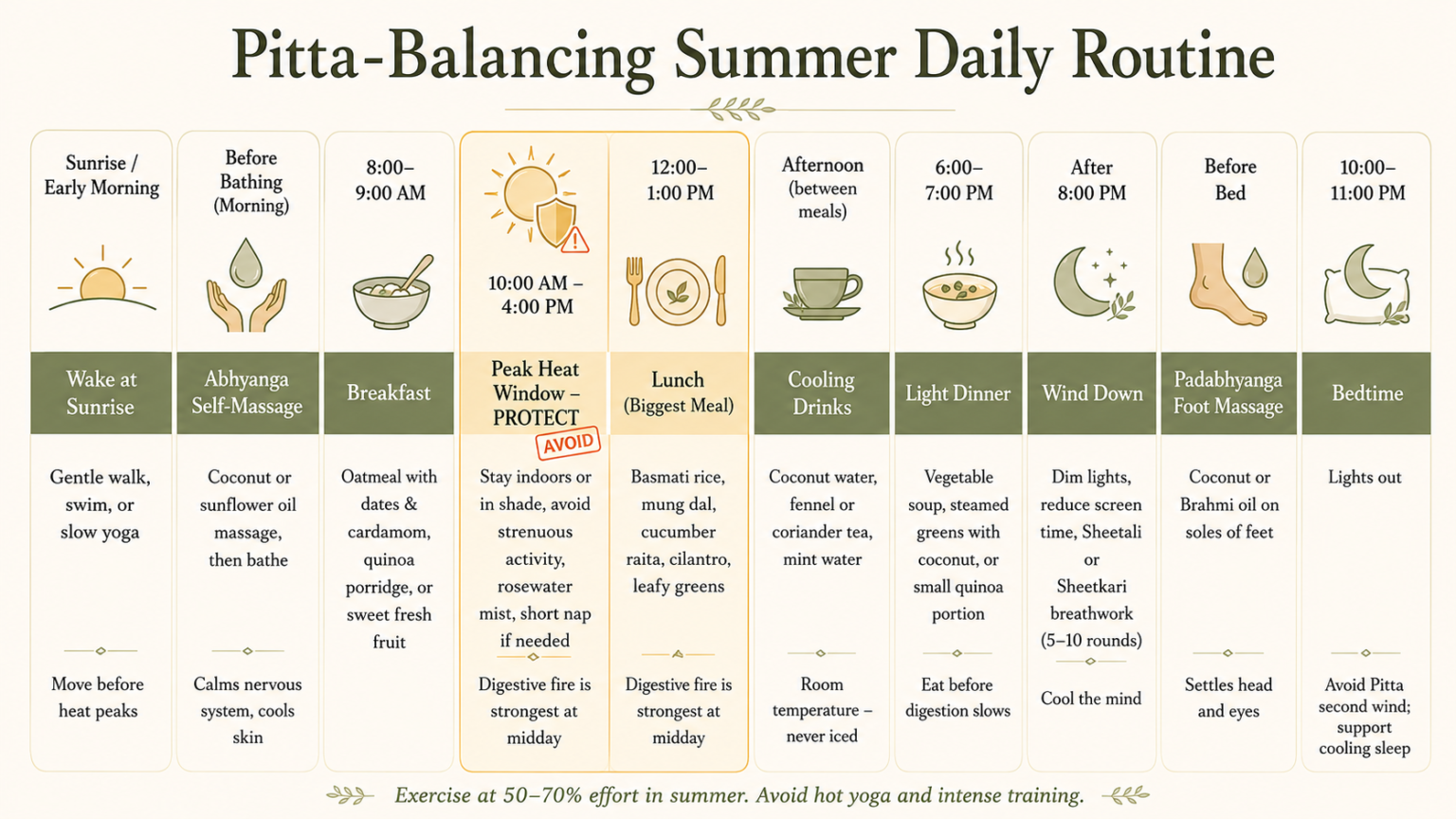
Breakfast (8:00–9:00 AM)
Oatmeal with dates and cardamom
Quinoa porridge with coconut milk
Sweet seasonal fruits
Lunch (12:00–1:00 PM) (largest meal)
Basmati rice
Mung dal
Cucumber raita
Fresh cilantro
Leafy greens
Asparagus
Zucchiniv
Dinner (6:00–7:00 PM)
Vegetable soup
Steamed greens
Small serving of quinoa
Coconut garnish
Ayurveda also teaches that digestion is strongest around midday, making lunch the ideal time for your most nourishing meal while keeping dinner light and easy to digest.
Sip Drinks That Cool Instead of Deplete
Hydration in Ayurveda isn’t simply about drinking more water.
It’s about choosing beverages that cool the body without weakening digestion.
Wonderful summer choices include:
Coconut water
Room-temperature water with cucumber or mint
Fennel tea
Coriander tea
Rose tea
Hibiscus tea
Instead of iced drinks, Ayurveda prefers room-temperature or slightly cool beverages, allowing digestion to remain steady while still providing refreshment.
At the same time, try to reduce foods that naturally generate more internal heat, including:
Chili peppers
Fried foods
Alcohol
Excess coffee
Vinegar-heavy dressings
Very salty snacks
Sometimes even small substitutions—fresh cilantro instead of spicy garnish, or lime instead of vinegar—can create a noticeable shift over time.
A Daily Rhythm That Keeps Summer Gentle
Just as food influences Pitta, so does the rhythm of the day.
Ayurveda encourages us to move with the natural flow of summer instead of pushing against it.
Begin the Morning Calmly
The coolest hours of the day are the perfect time for gentle movement.
A sunrise walk, an easy swim, or restorative yoga allows you to enjoy activity before the day’s heat intensifies.
Before bathing, consider a gentle Abhyanga using cooling oils such as coconut or sunflower oil. This nourishing ritual helps calm the nervous system while supporting healthy skin throughout the warmer months.
Protect Yourself During Peak Heat
Between 10:00 AM and 4:00 PM, both the environment and Pitta reach their highest intensity.
Whenever possible:
Stay in the shade
Wear loose cotton or linen clothing
Choose calming colors such as white, blue, or green
Mist your face with rose water
Rest briefly if the heat feels overwhelming
Rather than trying to push through the hottest part of the day, Ayurveda reminds us that honoring nature’s rhythm often preserves our energy.
Create a Cooling Evening Ritual
As the sun begins to set, allow your nervous system to slow with it.
A light evening meal supports restful digestion, while dimming lights and reducing screen time helps cool both body and mind.
Before bed, massage the soles of your feet with coconut or Brahmi oil (Padabhyanga). This simple Ayurvedic ritual is traditionally used to calm excess heat, soothe the mind, and encourage deeper, more restorative sleep
Aim to retire around 10 PM, before the second Pitta cycle begins later in the evening.
Gentle Practices That Calm Summer Heat
Beyond food and daily routines, Ayurveda offers simple practices that help restore emotional and physical balance throughout the season.
Cooling Breathwork
Practices such as Sheetali and Sheetkari Pranayama are traditionally used to reduce excess internal heat while promoting calmness and clarity.
Just five to ten slow rounds can become a refreshing pause during especially warm afternoons.
Gentle Movement
Summer is an invitation to soften rather than intensify.
Swimming, leisurely walks, restorative yoga, and mindful stretching support circulation without creating unnecessary heat.
Instead of striving for maximum effort, Ayurveda encourages moving at roughly 50–70% intensity, allowing the body to remain energized instead of depleted.
Herbs and Natural Cooling Support
Certain herbs have long been valued for helping maintain balance during warmer months.
Traditionally, practitioners may recommend:
Fennel
Coriander
Brahmi
Guduchi
Shatavari
Cooling topical remedies such as aloe vera, rose water, or sandalwood paste may also provide gentle comfort after time in the sun.
As always, consult a qualified healthcare professional or Ayurvedic practitioner before beginning herbal therapies, particularly if you have a medical condition or take prescription medications.
Living in Harmony with Summer
Every season offers an invitation to live a little differently.
Summer reminds us that balance isn’t created by resisting nature but by moving with it. As the days grow warmer, simple choices—cooling meals, restful evenings, gentle movement, and mindful daily rhythms—help the body remain steady, resilient, and vibrant.
Rather than waiting for imbalance to become overwhelming, Ayurveda encourages us to notice the body’s quieter signals and respond with kindness. Often, it’s these small, consistent acts of care that create the greatest transformation.
May this season become an opportunity not only to stay cool, but to cultivate greater harmony with yourself and the world around you.
One of the simplest ways to stay cool and balanced in summer begins in the kitchen. In Ayurvedic Cooking, you’ll learn how to prepare nourishing, seasonal meals that support digestion, calm excess Pitta, and help you live in greater harmony with your body’s natural rhythms.