The Quieting of the Mind: An Ayurvedic Approach to Mental Calm

There are moments when the mind simply won’t settle.

Not because something is wrong…

but because something hasn’t yet been processed, softened, or released.

In Ayurveda, mental calm isn’t something we force.

It’s something that begins to emerge when the body, breath, and awareness come back into rhythm.

The practices below are not techniques to master.

They are doorways — simple ways to return to a quieter state within.

A Few Ways the Mind Learns to Settle

Each of these practices meets the mind in a different way:

  • some gently balance
  • some cool and soften
  • some bring clarity
  • others restore energy


Over time, you begin to recognize what your system needs — not in theory, but in experience.

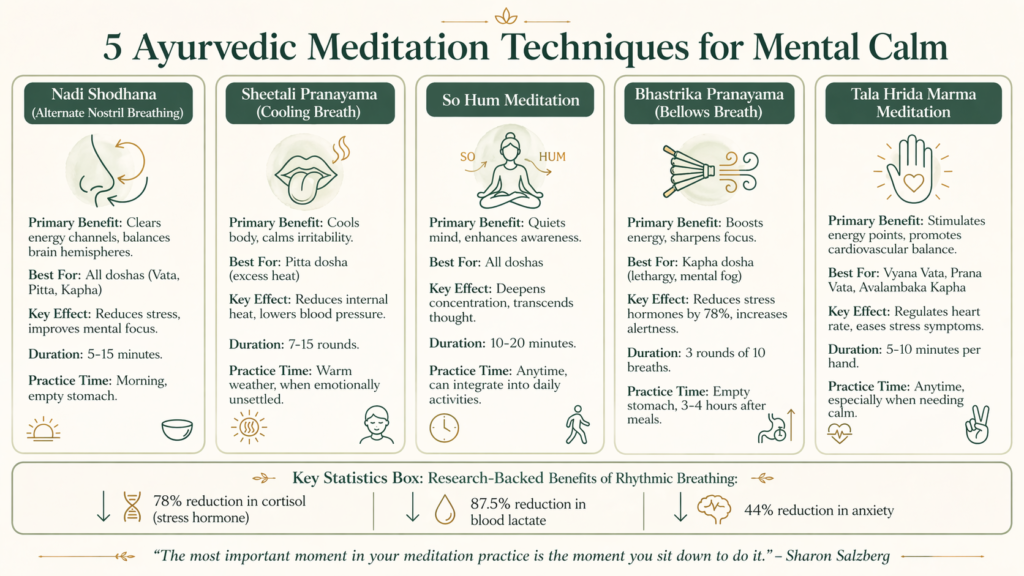
A Simple Overview of the Practices

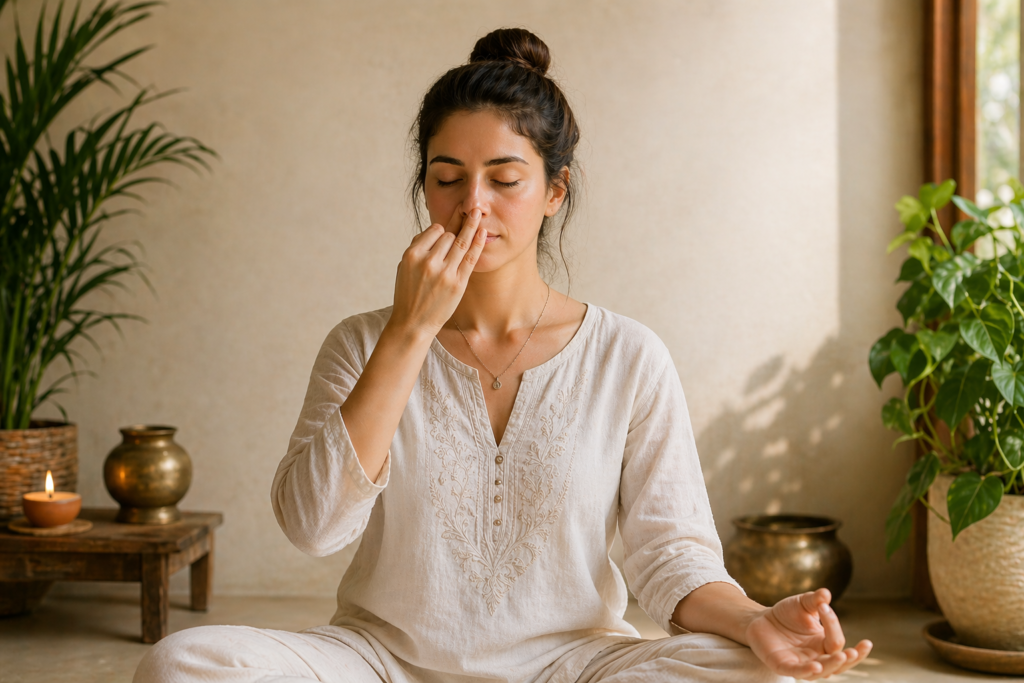
1. Nadi Shodhana

Balancing the Breath

There is a quiet intelligence in the breath — one that naturally knows how to restore balance when given the chance.

Nadi Shodhana works by gently alternating the breath between the nostrils, allowing the system to move from fragmentation into coherence.

Over time, the mind begins to feel:

  • less reactive
  • more centered
  • quietly clear


This is not dramatic.
It’s subtle — but deeply stabilizing.

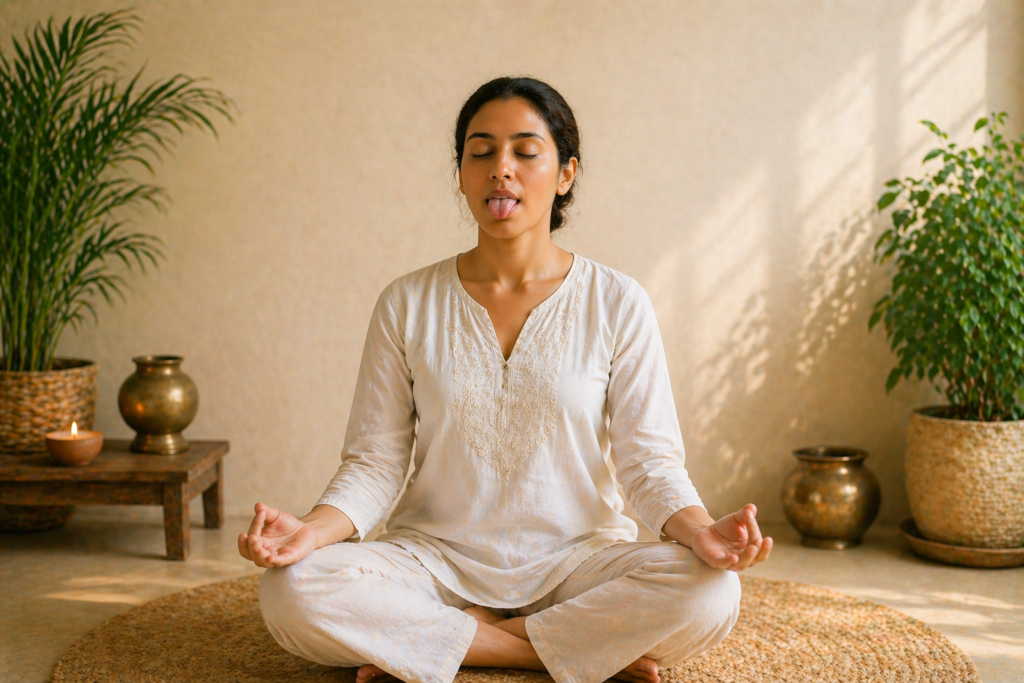
2. Sheetali Pranayama

Cooling What Feels Overheated

Some states of mind don’t need stimulation — they need cooling.

Irritation, restlessness, emotional intensity…
these are often signs of excess heat in the system.

Sheetali introduces a cooling breath that softens that intensity.

It’s especially supportive when:

  • emotions feel sharp or reactive
  • the body feels warm or inflamed
  • the mind won’t slow down

The effect is often immediate, a quiet exhale through the whole system.

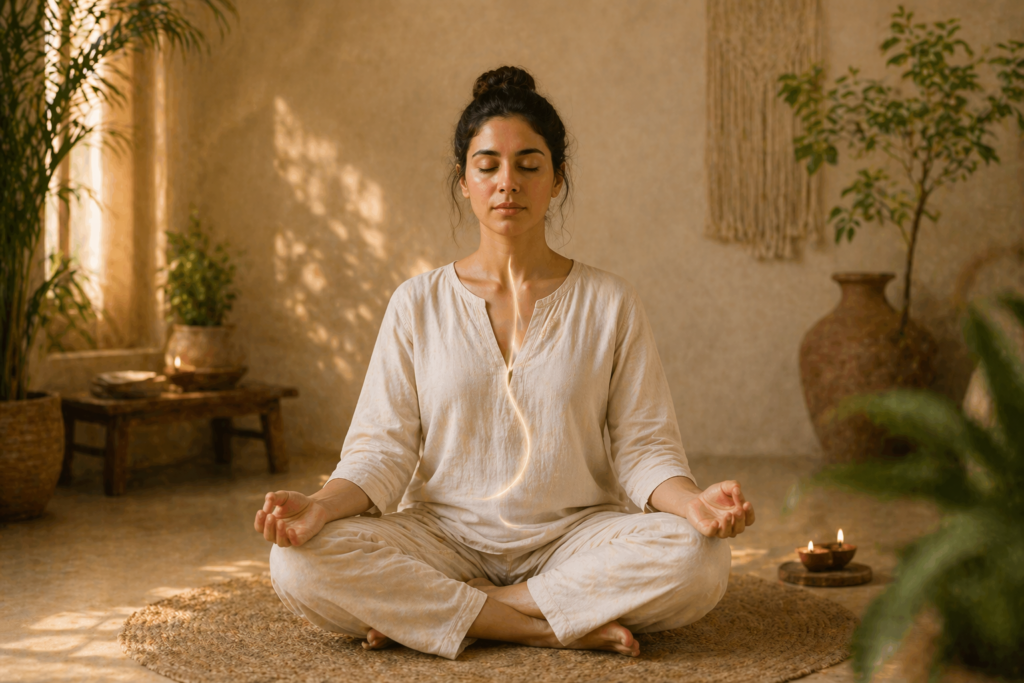
3. So Hum Meditation

Returning to Awareness

There’s a point in meditation where effort fades…
and awareness begins to rest in itself.

So Hum is less about doing, and more about remembering.

With each breath:

  • “So” on the inhale
  • “Hum” on the exhale


The mind gradually shifts from thinking… to witnessing.

And in that shift, something softens.

Not because thoughts disappear, but because they are no longer held so tightly.

4. Bhastrika Pranayama

Clearing What Feels Heavy

Not all imbalances feel like overactivity.

Sometimes, the mind feels:

  • dull
  • foggy
  • slow to respond


Bhastrika brings movement back into the system.

Through rhythmic, active breathing, it:

  • clears stagnation
  • increases alertness
  • restores a sense of inner energy


It’s less about calming and more about reawakening clarity.

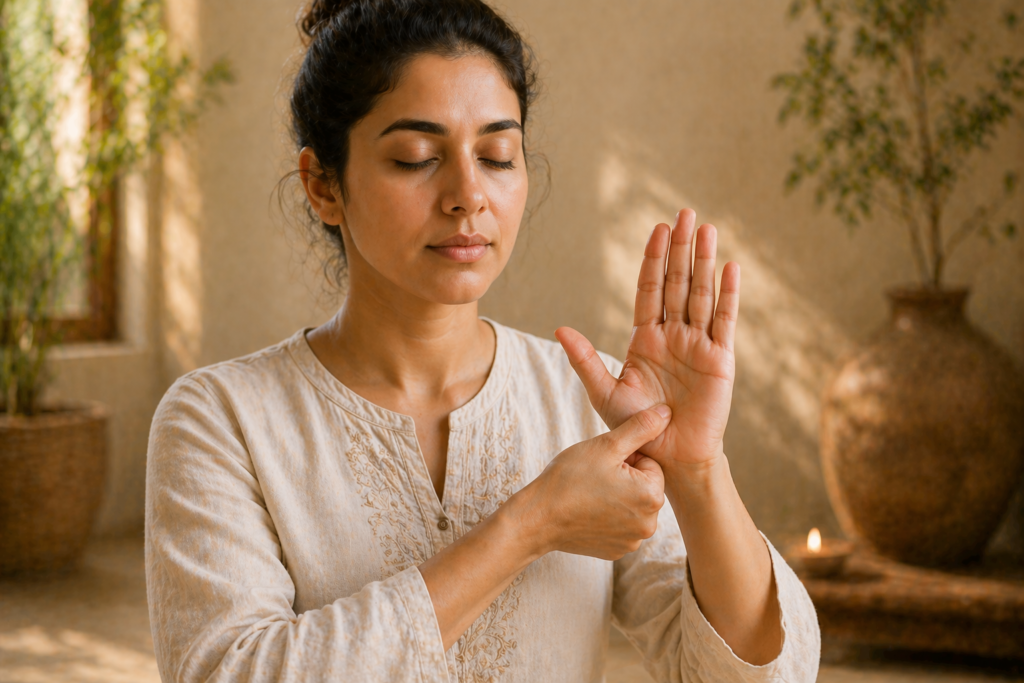
5. Tala Hrida Marma Meditation

Calm Through Touch

Not all meditation begins with the breath.

Sometimes, the body leads.

Tala Hrida — the center of the palm — is considered a subtle meeting point between the heart and the nervous system.

By placing gentle attention and pressure here, something shifts:

  • the breath softens
  • the body settles
  • the mind follows


It’s simple.
Almost quiet enough to overlook.

But often, the simplest practices are the ones the body understands most quickly.

A Closing Reflection

Mental calm is not something we achieve all at once.

It’s something we return to, again and again.

Sometimes, through breath.
Sometimes, through stillness.
Sometimes, through a single moment of awareness.

And over time, these small returns begin to shape something deeper:

A mind that doesn’t need to be controlled, because it has learned how to settle on its own.

A Gentle Way to Begin

You don’t need to practice everything.


Start with one.


A few minutes.

A single breath.

A quiet moment.


As Sharon Salzberg once said:

“The most important moment in your meditation practice is the moment you sit down to do it.”


And from there…

the rest unfolds.

Where Calm Begins to Deepen

Sometimes one practice brings a glimpse of calm—but true change happens when everything aligns.

Inside The Optimal Living Ayurveda Summit, explore meditation, breath, and daily rhythms with expert guidance—so calm becomes consistent and clarity becomes your baseline. This is where practice becomes a way of living.