

Top 5 Ayurvedic Remedies for Women’s Mood Swings
Mood swings are often linked to hormonal changes, especially during PMS or menopause. Ayurveda offers natural ways to address these imbalances by focusing on emotional and physical harmony.
Here are five remedies that can help:
- Shatavari: Supports hormonal balance and stabilizes mood through its phytoestrogenic properties. It also calms irritability and anxiety by soothing Vata and Pitta doshas.
- Ashwagandha: Reduces stress by lowering cortisol levels, balancing hormones, and promoting emotional stability.
- Abhyanga (Warm Oil Massage): A self-care ritual using warm herbal oils to calm the nervous system and reduce stress-induced mood swings.
- Shirodhara (Warm Oil Forehead Therapy): Steady streams of warm oil on the forehead relax the mind, regulate hormones, and improve emotional balance.
- Dietary and Lifestyle Adjustments: Tailoring meals and routines to your dosha can strengthen digestion, reduce toxins, and stabilize emotions.
These remedies work together to promote balance and emotional well-being. For best results, consistency and alignment with your unique needs are key.
1. Shatavari (Asparagus Racemosus)
Shatavari, often called the “Queen of Herbs”, is celebrated for its role in supporting women’s hormonal health and emotional well-being.
Its name, which translates to “she who possesses a hundred husbands”, highlights its traditional association with enhancing female vitality.
Shatavari works by influencing hormonal signals through its active compounds, Shatavarins. These steroidal saponins have phytoestrogenic properties, meaning they can interact with estrogen receptors to help maintain balanced hormone levels. This is especially beneficial during phases like PMS or menopause.
Beyond hormones, Shatavari acts as an adaptogen, helping to regulate the hypothalamic-pituitary-adrenal (HPA) axis. This helps manage stress and improve mood.
In Ayurveda, Shatavari is classified as a Rasayana, or rejuvenating herb. It nourishes the reproductive tissues (Shukra Dhatu) and builds Ojas, which is considered the essence of vitality and immunity.
Its cooling potency and Sattvic nature make it effective for calming the irritability and anxiety often linked to hormonal changes.
Shatavari’s cooling and nourishing qualities help soothe Pitta and Vata Doshas, which are often aggravated during hormonal shifts.
This makes it a go-to herb for easing emotional and physical imbalances.
Incorporating Shatavari Into Your Routine
Adding Shatavari to your daily life is simple and effective. The traditional method is to mix ½–1 teaspoon of Shatavari powder into warm milk (cow or almond) with a pinch of cardamom or nutmeg. This can be enjoyed in the morning or before bed.
For convenience, capsules are another option. Take 1–2 capsules (standardized extract) twice daily after meals with water. If you’re using Shatavari specifically for PMS-related mood swings, start incorporating it into your routine about a week before your period begins.
Consistency is crucial with Ayurvedic herbs. Shatavari works gradually, so it may take several weeks to notice improvements in mood and cycle regularity.
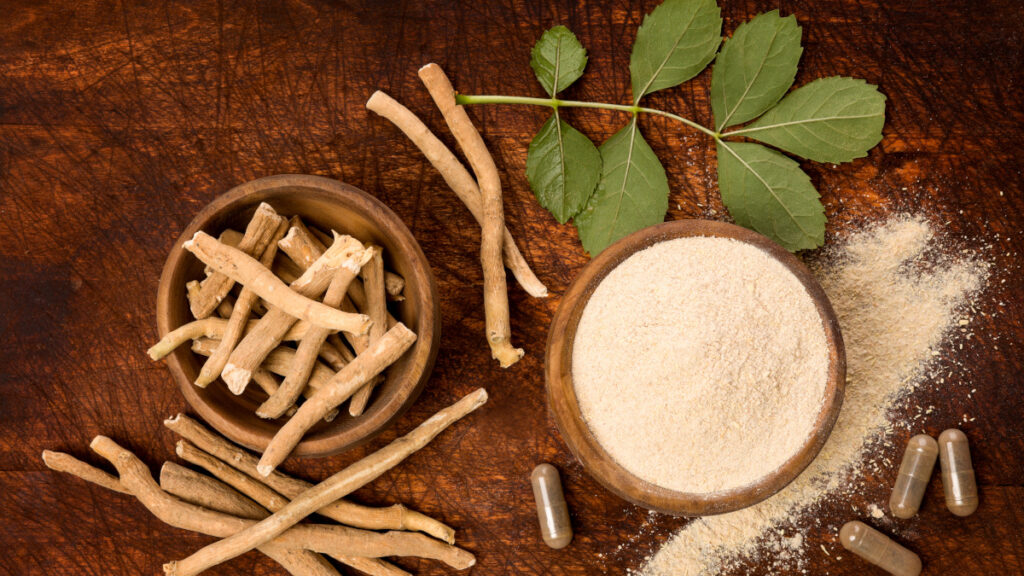
2. Ashwagandha (Withania Somnifera)
Ashwagandha, often called “Indian Winter Cherry”, has earned its place in Ayurveda as a powerful herb for managing stress and emotional challenges.
This ancient remedy is known for its ability to regulate cortisol levels, reducing them by up to 30%. By doing so, it helps balance key hormones like estrogen, progesterone, and testosterone, creating a foundation for its broader effects.
Ashwagandha plays a critical role in stabilizing estrogen levels, which is particularly helpful for women dealing with PMS-related mood swings.
It also supports thyroid health by boosting T3 and T4 levels, making it beneficial for those experiencing mood instability due to hypothyroidism.
On top of that, Ashwagandha enhances GABA activity and modulates serotonin, which can ease depressive symptoms and reduce mood fluctuations.
Research shows that perimenopausal women who took 300 mg of Ashwagandha root extract twice daily for eight weeks experienced significant relief from both psychological and physical symptoms.
In Ayurveda, Ashwagandha is classified as a Rasayana, a rejuvenating herb that promotes longevity and mental clarity.
It is particularly effective at pacifying the Vata Dosha, which is linked to anxiety, nervousness, and sleep disturbances. Its grounding qualities help calm erratic emotions and foster a sense of stability.
Incorporating Ashwagandha Into Your Routine
You can add Ashwagandha to your daily life in a few simple ways. Try mixing a teaspoon of Ashwagandha powder into warm milk before bedtime, or take 300–500 mg of root extract capsules twice a day with meals.
For PMS-related mood swings, start using it 7–10 days before your period and continue through its onset.
Whether you take it in the morning for stress relief and energy or in the evening to calm your nerves, consistent daily use over 4 to 12 weeks is key to noticing its benefits for hormonal health and mood stability.
However, if you are pregnant, breastfeeding, or managing conditions like thyroid issues, diabetes, or high blood pressure, consult your healthcare provider before starting Ashwagandha.
3. Abhyanga (Warm Herbal Oil Massage)
Ayurvedic massage therapies, like Abhyanga, provide a hands-on way to support emotional well-being.
Abhyanga is an ancient practice of self-massage using warm herbal oils. The Sanskrit term Sneha means both “oil” and “love”, symbolizing how this ritual serves as an act of self-care that brings warmth and stability to your emotions. Each session typically lasts about 30–40 minutes.
In Ayurveda, mood swings often stem from imbalances in Vata (linked to anxiety and restlessness) or Pitta (associated with irritability and anger). Warm oil massages help ground Vata and cool Pitta, promoting emotional steadiness.
Additionally, Abhyanga supports lymphatic drainage and improves blood flow, helping to clear toxins (ama) that can cloud the mind and contribute to emotional instability.
Abhyanga soothes the nervous system and lowers cortisol, the stress hormone. This reduction in stress helps regulate estrogen and progesterone, which play a key role in mood-related neurotransmitters like serotonin.
The massage also encourages a shift from the “fight-or-flight” response to a “rest-and-digest” state, helping conserve energy and slow the heart rate.
Abhyanga can give a deep feeling of stability and warmth.
Sweta Vikram, Ayurvedic Doctor
Incorporating Abhyanga Into Your Routine
To incorporate Abhyanga into your routine, warm your chosen oil using an oil warmer or by placing the bottle in hot water.
Use circular motions on the head and joints, and long strokes on the arms and legs. When massaging your abdomen, follow a clockwise motion to align with your colon’s natural flow.
Let the oil absorb for about 20 minutes before taking a warm bath or shower, avoiding harsh soaps so a light layer of oil remains to nourish your skin.
If you’re dealing with PMS-related mood swings, try scheduling sessions at least a week before your period to help manage hormonal shifts and stress.
However, avoid Abhyanga during the first three days of menstruation, during heavy flow, or if you’re experiencing a fever or acute indigestion.
4. Shirodhara (Warm Oil Forehead Treatment)
Shirodhara offers a soothing and direct way to calm the mind, making it a valuable remedy for managing mood swings in women.
This ancient Ayurvedic practice involves pouring a steady stream of warm oil onto the forehead, specifically targeting the ajna marma (third eye point), for 15–90 minutes.
With a history spanning over 5,000 years, Shirodhara is known for quieting racing thoughts and helping to restore emotional balance.
Shirodhara aligns with Ayurvedic principles by addressing imbalances in the Doshas – specifically Vata, which is linked to anxiety and insecurity, and Pitta, associated with anger and frustration.
The treatment stimulates the hypothalamus and pituitary gland by activating peripheral nerves in the forehead.
This process plays a role in regulating hormones that stabilize mood. It also clears the prana vaha srotas (energetic channels in the head) and awakens the ajna chakra, creating a calm yet alert state similar to meditation. The steady stream of warm oil activates critical brain centers, promoting the balance of serotonin and catecholamines.
Done with care and right intention, Shirodhara can bring us back to our natural state of bliss, allowing us to find inner peace no matter what is happening in the world around us.
Myra Lewin, Ayurvedic Practitioner

Incorporating Shirodhara Into Your Routine
For the best experience, visit a trained Ayurvedic practitioner who can ensure the oil’s temperature (around 104°F) and flow remain consistent.
If professional treatment isn’t an option, try “Shiro pichu” at home by soaking a cotton pad in warm medicated oil and placing it on your forehead.
To align with hormonal cycles, schedule sessions during your period or about a week before it starts.
After treatment, avoid electronics for at least three hours to preserve the sense of calm. When washing out the oil, apply shampoo to dry hair first before adding water – this makes the oil removal process easier.
Oil recommendation and their benefits:
| Sesame Oil | A neutral base, often enhanced with herbs like Ashwagandha or Brahmi |
| Coconut Oil | Offers a cooling effect, ideal for Pitta-related issues |
| Ksheerabala Oil | Promotes deep relaxation and better sleep |
| Buttermilk (Takra) | Cools the mind and reduces stress |
5. Dietary and Lifestyle Adjustments
In Ayurveda, achieving emotional balance isn’t just about herbal remedies or oil therapies – it also involves making thoughtful dietary and lifestyle changes that support overall well-being.
What you eat and how you live can deeply influence your mood and emotional stability. Ayurveda emphasizes that digestion is the cornerstone of hormonal health.
A strong digestive fire (agni) allows your body to absorb nutrients effectively while eliminating toxins (ama) that can cloud your emotions.
By choosing the right foods, you can strengthen your agni and reduce ama, creating a foundation for emotional clarity and balance.
Dietary adjustments in Ayurveda are tailored to balance your Doshas, which directly influence emotional health.
- For example, if you’re dealing with anxiety or restlessness caused by a Vata imbalance, focus on warm, grounding foods like soups, ghee, and cooked vegetables. Avoid cold, raw, or dry foods like salads, cold drinks, and crackers.
- On the other hand, if irritability or anger from a Pitta imbalance is affecting you, cooling foods such as cucumber, coconut, and melons can help, while spicy or fried foods should be minimized.
- For feelings of sluggishness or heaviness tied to a Kapha imbalance, lighter and warming meals with spices like black pepper, ginger, and cloves are ideal. Reducing heavy dairy products can also make a big difference.
Ayurveda also highlights the importance of consistent meal times to stabilize hormones and the nervous system.
Eating your largest meal between 10 a.m. and 2 p.m. – when your digestive fire is at its peak – can greatly enhance digestion and energy levels.
Meanwhile, avoiding mood disruptors like caffeine, refined sugars, and processed foods can prevent blood sugar spikes that lead to anxiety or energy crashes. Instead, focus on foods that support hormone balance, like healthy fats. Ingredients such as ghee, dates, and almonds are cherished in Ayurveda for their ability to build Ojas – the essence of vitality that boosts emotional resilience.
Adjustments to Your Daily Routine
Start your day with a glass of warm lemon water to flush out toxins and stimulate your digestion.
Throughout the day, sip on CCF tea – a simple blend of cumin, coriander, and fennel seeds – to support digestion and balance all three Doshas.
In the evening, unwind with a comforting cup of Golden Milk, made with warm milk, turmeric, ginger, and ghee, to calm your nervous system and prepare for restful sleep.
Eating dinner at least 2–3 hours before bedtime allows your body to digest properly, and even something as simple as taking a mindful breath after your last bite can help shift your body into a state of relaxation.
Conclusion
Managing mood swings isn’t about masking the symptoms – it’s about finding balance within.
The five Ayurvedic remedies discussed here work together to support that goal.
Consistency makes all the difference. Ayurveda offers a path that respects the body’s natural rhythms. This approach goes beyond addressing symptoms – it works to restore equilibrium.




Nourish Your Emotional Resilience

Deepen your inner balance with the 7 Days of Self-Love mini course. Grounded in Ayurvedic principles, this week-long journey guides you through daily practices – from self-massage to mindful cooking – that nourish emotional resilience, strengthen relationships, and help you embody a more stable, grounded inner rhythm.
Recent Blog Post



© 2023 The Natural Law | Privacy Policy | Terms of Use